
Local Guide · 8 min read
Window treatments Temora extreme heat and cold: the Riverina guide
Chris & Campbell, LuxeShutters · 15 April 2026
'What can I do about this heat?' is the question Chris and Campbell hear on nearly every Temora home visit. The answer starts at the windows -- the single biggest point of heat gain in summer and heat loss in winter. The right window treatments temora extreme heat cold conditions demand will reduce your cooling load, cut heating bills, and protect furnishings from UV damage year-round. This guide covers which products work, which windows they suit, and why a proper measure and quote matters.
Temora's climate: what the Bureau of Meteorology data shows
Temora sits in the NSW Riverina, a hundred kilometres from any coastal moderating influence. The Bureau of Meteorology climate data for station 073026 records a January mean maximum above 32°C with observed summer peaks past 44°C. July mean minima sit around 3°C, with radiation frosts recorded below -4°C. That near-48-degree swing between summer afternoon extremes and winter overnight lows is what sets Temora apart from coastal NSW, and what makes under-specified window furnishings so costly in both comfort and energy bills.
Single-pane glass, which dominates older Temora homes built before the 1990s, transmits around 87% of incident solar radiation. The Your Home Australia passive design guide for windows notes that unshaded west-facing glass in a hot inland climate delivers heat loads equivalent to a one-bar radiator per square metre of glazing. In winter, the same glass loses heat at around 6 W/m² per degree of temperature difference between inside and out -- a meaningful overnight drain on any heating system.
Window treatments temora extreme heat cold: blocking the summer sun
For the summer side of window treatments temora extreme heat cold management, the core principle is to stop solar radiation before it reaches the glass. External products achieve this far better than anything fitted on the inside of the frame.
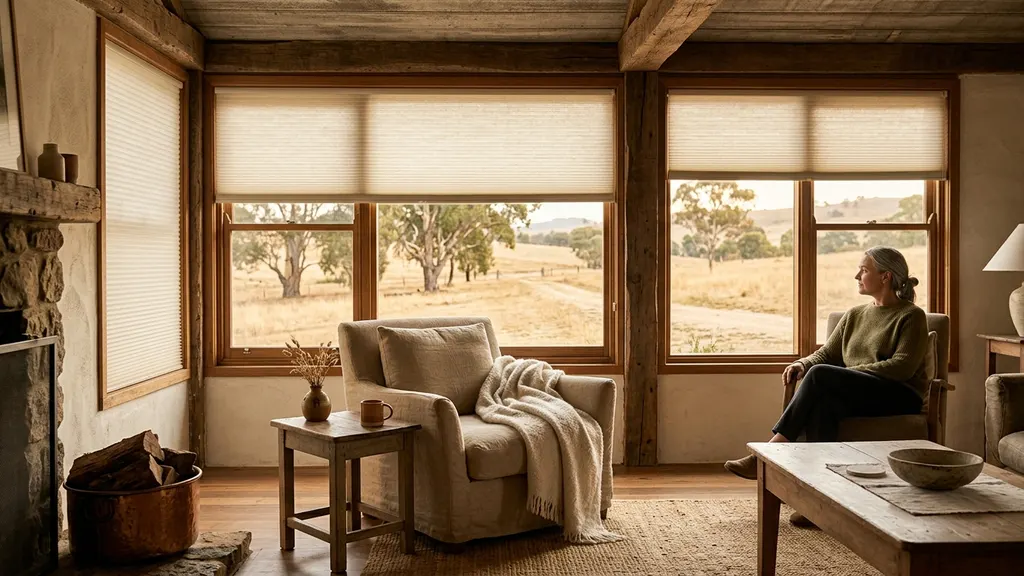
External zipscreens and awnings intercept sunlight in the air before it heats the glass and radiates inward. A well-fitted zipscreen on a west-facing window blocks 70-80% of heat gain, against 20-45% for an internal blockout blind on the same opening. Our NSW comparison of plantation shutters and roller blinds covers the full performance trade-offs across treatment types. Where external shading is not practical -- heritage facades, strata body limits, or narrow eave clearances -- plantation shutters with louvres angled upward to deflect direct sun are the strongest internal alternative. The Australian Government energy guidance for households recommends external shading as a first priority, with internal treatments as a secondary layer for exactly these situations.
For a closer look at this, see Window treatments home value Australia: what NSW buyers expect.
For a closer look at this, see Best window treatments for rental properties in NSW: a landlord guide.
For a closer look at this, see Motorised blinds Australia: are smart window coverings worth the cost?.
For a closer look at this, see Living room window treatments Australia: light, privacy, style in NSW.
For a closer look at this, see Window treatments for heritage homes in NSW: style and compliance.
For a closer look at this, see Best window treatments for bedrooms: blackout, privacy and style.
For a closer look at this, see Home office window treatments: control glare and boost productivity.
Window treatments temora extreme heat cold: surviving Riverina winters
The window treatments temora extreme heat cold challenge in winter is the reverse of summer: keeping the warmth you have generated inside the building rather than letting it drain out through the glass overnight.

Glass radiates warmth outward rapidly on cold nights. A blind or curtain with even small side gaps routes warm room air to the gap and vents it outside. For winter retention, heavyweight lined curtains with ceiling-to-floor coverage and side returns perform well, as do plantation shutters with tight perimeter seals and cellular blinds -- which use an air-pocket structure to resist heat transfer in both directions. The BOM Temora climate averages show July nights average below 4°C with frosts extending into September, a long season where thermal retention matters. For north-facing rooms, louvred shutters opened in the morning to admit free passive solar heat and closed before the afternoon chill are a straightforward seasonal tool. See the full energy performance breakdown in our guide to energy-efficient window coverings for Australian homes.
Window treatments temora extreme heat cold: comparing your options
The table below compares the main product types on the metrics that matter most for window treatments temora extreme heat cold performance: summer heat gain reduction, winter heat retention, louvre adjustability, and best window orientation.
| Treatment type | Summer heat reduction | Winter retention | Adjustable louvres | Best orientation |
|---|---|---|---|---|
| External zipscreen | 70-90% | Moderate | No | West, north-west |
| Plantation shutters | 40-55% | Good | Yes | North, east |
| Blockout blind + pelmet | 30-45% | Good | No | East, south |
| Cellular blind | 25-35% | Very good | No | South, south-west |
| Standard curtain (unlined) | 15-25% | Poor | No | Low-priority rooms |
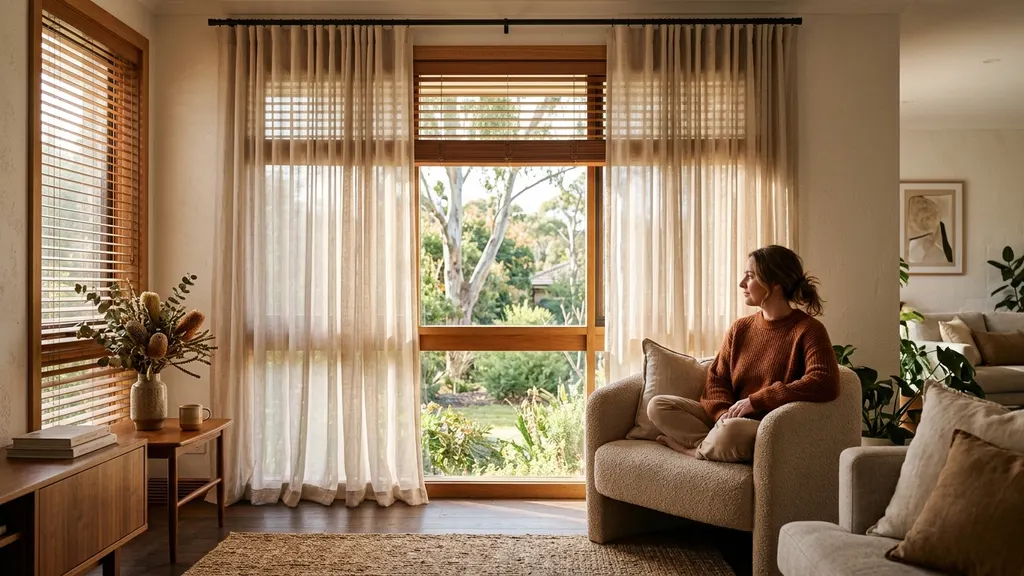
No single product wins across every orientation. A north-facing living room benefits from adjustable louvres -- shutters or external venetian blinds -- that open to admit winter sun and close against summer afternoon glare. A west-facing bedroom that cops direct sun from 3 to 4 pm is best served by an external zipscreen. South-facing windows rarely receive direct sun and are a winter heat-loss problem where a cellular blind or lined curtain resolves the issue at lower cost than shutters.
Energy savings and running costs over time
According to the Choice Australia home improvement reviews, the right window treatments reduce air-conditioning runtime by 20-30% in Australian summers. In Temora's climate, where a 5 kW split system might run six to eight hours on a 40-degree January day, that reduction translates directly to lower power bills. The payback period for quality shutters or external zipscreens is typically three to five years when both cooling and heating load reductions are included.
CanStar Blue's household energy cost guides estimate the average Australian home spends around $1,800 per year on heating and cooling. Windows account for roughly 40% of heating energy loss and up to 87% of summer heat gain. Improving window treatments temora extreme heat cold performance can shave several hundred dollars from annual energy bills -- more in a four or five-bedroom Temora home. Landlords should see our NSW landlord guide to window treatments for the cost-recovery analysis specific to investment properties.
Why installation quality makes all the difference
A plantation shutter with a 10 mm gap at the top loses most of its thermal benefit. An outdoor blind that does not seal under wind load lets hot air drive behind the fabric on a 40-degree afternoon. Window treatments temora extreme heat cold conditions are not forgiving of poor installation -- a near-50-degree annual temperature swing is too large for small gaps to be inconsequential.
Chris and Campbell personally measure and quote every window before ordering product. That includes checking reveal depths for shutter panels, sill and head clearances for roller blinds, and fixing-point strength for external zipscreen tracks on rendered masonry or weatherboard -- the two most common external wall types in Temora. Every visit identifies non-square openings, protruding hardware, and wall obstructions before anything is ordered. See how this approach applies across the wider Riverina in our Wagga Wagga window treatment climate guide.
As an authorised CWGlobal dealer, we supply products rated to Australian Standards for thermal and UV performance. The Sustainability Victoria windows and shading guide covers thermal performance principles for window coverings, and the products we install as an authorised CWGlobal dealer are specified to meet Australian Standards for thermal and UV performance.
Frequently asked questions
What window treatments work best for extreme heat in Temora, NSW?
External zipscreens and fixed awnings perform best in Temora's summer heat because they intercept solar radiation before it reaches the glass. Where external shading is not practical, plantation shutters with adjustable louvres cut heat gain by up to 55% on east and north-facing windows. For west-facing windows -- which receive the harshest afternoon sun -- combining an external shade with an internal blockout blind gives maximum control. The right window treatments temora extreme heat cold performance delivers comes down to orientation first, product second. See the Your Home Australia passive design windows guide for full performance data by treatment type.
How much can window coverings reduce heat gain in summer?
External awnings and zipscreens block 70-90% of solar heat gain according to the Your Home Australia passive design guide for windows. Internal blockout blinds reduce heat gain by 20-45% depending on fabric reflectivity and whether a pelmet is fitted. Plantation shutters with closed louvres sit in the 40-55% range for internal products. The difference is that external products stop heat before it enters the glass; internal products manage it after it has already entered the room. For a Temora home with multiple west-facing windows, external shading is not optional if you want those rooms genuinely cool through January and February.
Do window treatments help with cold nights and frost in Temora?
Yes. Window treatments temora extreme heat cold management works in both directions. In winter, glass is the primary point of radiant heat loss -- a single-pane 2 m² window can lose as much heat overnight as a small portable heater adds. Fitted plantation shutters, cellular blinds, or heavyweight lined curtains with a ceiling-height pelmet reduce window heat loss by 30-40%, according to energy.gov.au home energy guidance. For Temora's frost-prone nights -- which BOM records show running from May through September -- this thermal retention matters as much as summer cooling.
Are plantation shutters worth the investment for Temora's climate?
For most rooms, yes. Plantation shutters offer adjustable louvre control across all seasons: admit north-facing winter sun in the morning, close against afternoon summer heat, achieve near-full blockout at night. They add documented resale appeal in NSW property markets and last 20-plus years with basic maintenance. The cleaning routine is covered in our plantation shutters cleaning guide. The upfront cost is higher than roller blinds, but the dual-season thermal performance and longevity make them cost-effective over the product's life in Temora's demanding climate.
What is the difference between external and internal window treatments for heat?
External treatments -- zipscreens, awnings, external venetians -- block solar radiation in the air before it contacts the glass, keeping the glass cooler and reducing radiated heat entering the room. Internal treatments intercept radiation after it has already passed through the glass and begun heating the space. The thermal difference is real: the same window with an external zipscreen versus an internal blockout blind can differ by 8-12°C in room air temperature during peak afternoon sun. For window treatments temora extreme heat cold conditions, external products on west and north-west facing windows justify the higher installation cost.
How do I get window treatments measured and quoted in the Riverina?
Chris and Campbell personally handle every measure and quote across Temora, Wagga Wagga, Griffith, and surrounding Riverina towns. The BOM climate records for Temora station 073026 confirm the full seasonal temperature range that every product must handle. A visit typically runs 60-90 minutes: they check each window's orientation, dimensions, existing hardware, and wall construction, then provide itemised written pricing on the spot with no obligation. As an authorised CWGlobal dealer for the Riverina, products are backed by manufacturer warranties and rated to Australian Standards for thermal performance.


